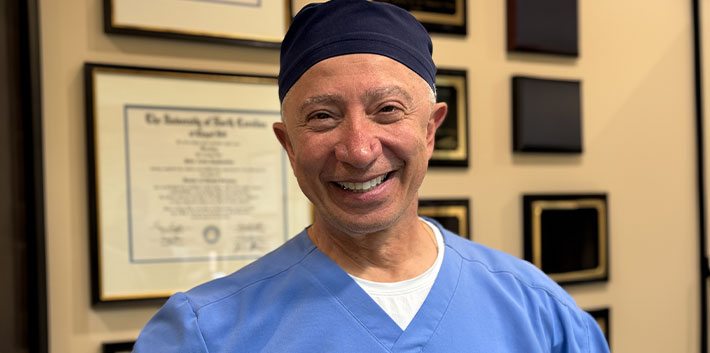
 Dr. Peter Tzendzalian, DDS
 Kristin Tzendzalian
 Giving Back
If you’ve noticed black triangles between teeth, you’re not alone. These small dark spaces near the gum line can appear gradually over time or seem sudden after orthodontic treatment like braces or Invisalign. Regardless of how they develop, black triangles can be frustrating, especially when they affect the appearance of your front teeth and your smile.
At Aesthetic Oral Health in Durham, NC, we often see patients concerned about black triangles. You might feel self-conscious in photos, tired of friends asking if you have food stuck, or worried that treatment will involve aggressive procedures. The good news is that effective solutions exist, and the right approach depends on your gum health, tooth shape, and dental structure.
What is a black triangle (open gingival embrasure)?
A black triangle, or open gingival embrasure, is a gap that forms at the bottom edge between two teeth near the gum tissue. In a healthy smile, this space is filled by a small wedge of gum called the papilla. When the papilla doesn’t fill the space, light passes through, creating the appearance of black triangles.
These gaps can range from tiny to wide enough to trap food and draw attention when you speak or smile. Many people notice black triangles most clearly in their upper front teeth, as these are more visible during conversations. Beyond aesthetics, these gaps can make cleaning more challenging and increase the risk of cavities if plaque accumulates in hard-to-reach areas.
Why do black triangle teeth happen?
Black triangles typically result from a combination of gum tissue support and tooth shape. Even if the rest of your smile looks healthy, there’s often a dental health reason behind the change.
Common causes include:
- Gum recession and bone loss: Gum recession exposes more of the tooth, while bone loss from periodontal disease reduces support under the gums, preventing the papilla from filling the space.
- Gum disease and inflammation: Gum disease damages gum health over time, affecting how gums frame your teeth and increasing the risk of further recession.
- Tooth shape: Teeth with a triangular shape—wider at the biting surface and narrower at the base – naturally create larger spaces near the gums.
- Orthodontic treatment: Braces and aligners straighten teeth but can reveal hidden spaces that were previously masked by overlapping teeth.
- Thin gum tissue: Thin gum tissue is more prone to recession and inflammation, contributing to small gaps.
Other factors include restorations or fillings that alter contact points between teeth, or clenching and wear that change how teeth meet. Identifying the primary cause is key to developing an effective treatment plan.
Do black triangles between teeth mean you have gum disease?
Not necessarily, but they can be a warning sign. Black triangles may result from tooth shape or orthodontic treatment, but gum recession and bone loss are often linked to periodontal disease. It’s important to check.
During an exam, we assess your gums for inflammation, measure support around your teeth, and review your dental hygiene habits. We also identify areas where food particles tend to trap, as this increases the risk of gum disease and tooth decay. If gum disease is present, periodontal therapy and preventive care can protect your oral health and support healthier gums.
Everyday frustrations: food traps, speech, and confidence
Black triangles can cause daily annoyances. You might find yourself constantly checking the mirror, using a napkin after meals, or worrying about food getting stuck between your teeth. Open gingival embrasures often trap food, especially spinach, poppy seeds, or grains.
These gaps can also affect how floss moves between teeth and how air flows when you speak, particularly around the front teeth. The result feels like both a cosmetic and comfort issue. Addressing these concerns is important, as the appearance of your smile and daily function are closely tied to long-term dental health.
Treatment options for black triangles between teeth
The best treatment depends on your gum health, the size of the gap, and the contact point between your teeth. We prioritize solutions that support oral health first, then refine aesthetics. Common procedures include:
Periodontal therapy and preventive dentistry
If gum disease or periodontal disease is a factor, treating it is essential. Healthy gums stabilize better, and your oral hygiene routine becomes more effective when inflammation is controlled. Professional cleanings, targeted periodontal therapy, and home care guidance can reduce bleeding and swelling, improving gum tissue health over time.
At home, focus on these practices:
- Brush gently along the gum line to protect against irritation and recession.
- Use floss and small brushes designed for cleaning between teeth.
- Pay extra attention to areas prone to food trapping.
This approach supports gum health and reduces the risk of tooth decay in hard-to-clean areas.
Cosmetic bonding (dental bonding)
Cosmetic bonding uses tooth-colored material to reshape the tooth and reduce the visible triangle. Bonding is a conservative option for small gaps, especially in the front teeth where aesthetics are most important. Your dentist can adjust the tooth contour to extend the contact point closer to the gum line, minimizing the space.
Bonding works best when gums are healthy and the gap isn’t too large. Skilled shaping ensures the tooth looks natural, cleans well, and doesn’t create new food traps. With proper design, bonding can improve the appearance of black triangles while maintaining a balanced smile.
Porcelain veneers
Porcelain veneers can address black triangles by altering the shape of your teeth, closing gaps, and enhancing symmetry. Veneers are ideal for larger cosmetic changes, such as improving tooth color and shape simultaneously. They’re particularly helpful for teeth with a pronounced triangular shape or gaps caused by wider biting edges.
Your dentist will evaluate how much tooth structure is needed to achieve a natural look that supports good oral hygiene and a comfortable bite.
Orthodontic adjustments and interproximal reduction
Orthodontic care can sometimes reduce black triangles by shifting teeth to create better contact points. Interproximal reduction, which involves polishing a small amount of tooth enamel between teeth, can refine how teeth fit together. This controlled adjustment helps teeth align with parallel edges, reducing gaps at the gum line.
Orthodontic adjustments are especially useful after braces or aligners when alignment is excellent but contact areas need improvement. Your dentist and orthodontist can collaborate on the best plan for your spacing.
Gum-focused aesthetic options
Emerging cosmetic approaches, such as hyaluronic acid fillers for the papilla, may be discussed in some cases. These options depend on the type of gap, tissue stability, and overall oral health. If you’re curious, ask your dentist about evidence-based solutions that suit your situation.
Top tips to prevent black triangles from worsening
While some factors are anatomical, daily habits play a significant role in preventing progression. The American Dental Association emphasizes consistent dental hygiene and professional care to protect gum health and prevent gum disease.
Follow these tips:
- Maintain a steady dental hygiene routine with gentle brushing and daily cleaning between teeth.
- Address bleeding gums early to prevent inflammation and recession.
- Stay consistent with dental exams and cleanings to monitor gum health and catch changes.
- Use recommended tools, such as floss techniques or small brushes, for better cleaning in tight areas.
- If undergoing orthodontic treatment, ask how tooth shape and gum tissue may affect black triangle risk.
Prevention helps protect against bone loss, supports healthy gums, and reduces the likelihood of small triangles becoming more noticeable.
When should you see a dentist about black triangles?
If you notice new gaps near your gum line or black triangles after orthodontic treatment, schedule an evaluation. You deserve clear answers and a personalized plan. Treatment options range from preventive care and periodontal therapy to cosmetic bonding and porcelain veneers, with the best results tailored to your gums, bite, and tooth shape.
At Aesthetic Oral Health in Durham, we take a patient-first approach, explaining your options in plain language. If you’ve been delaying care due to uncertainty or embarrassment, know that we’re here to help you feel comfortable and confident. Contact us to schedule a visit and learn how we can help you love your smile again.