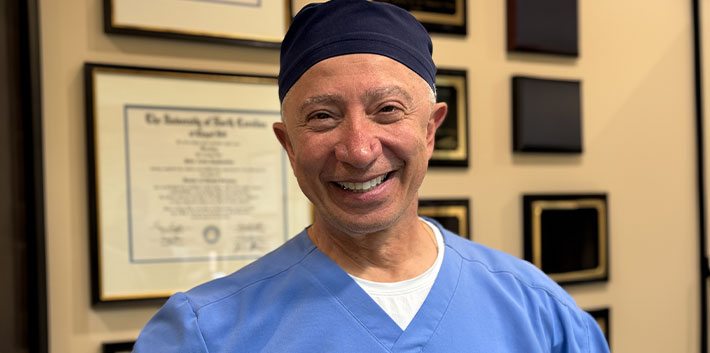
 Dr. Peter Tzendzalian, DDS
 Kristin Tzendzalian
 Giving Back
It can feel confusing to hear you need a dental crown when you have no tooth pain. You might be chewing normally, drinking hot coffee without trouble, and feeling fine overall. So it’s natural to wonder, do I need a dental crown if nothing hurts?
At Aesthetic Oral Health in Durham, we hear this question often. Our goal is to help you understand what we see during an exam, why protecting your natural tooth early can prevent further damage, and how modern restorative dentistry (including CEREC crowns) can restore strength and a natural appearance while keeping patient comfort front and center.
Do I need a dental crown if my tooth doesn’t hurt?
Pain is not the only sign of a problem. A tooth can have small cracks, thin enamel, or a weakened structure that is calm today but vulnerable tomorrow. A crown placement recommendation often means your tooth needs complete coverage and stability before a broken tooth or deeper infection forces more intensive dental care.
Why a tooth can be “fine” today and fail later
Your natural teeth are strong, but they are not indestructible. Every day, your back teeth absorb heavy biting pressure, especially when you chew hard foods. Over time, wear, old fillings, or a past injury can leave areas of the tooth thin enough to flex. That flexing can quietly worsen tiny fractures until the entire tooth starts to split.
Another reason pain may not show up right away is how nerves respond. A crack can sit in the outer layers of a tooth without reaching the nerve. You may only notice occasional sensitivity when biting or when something cold hits the gum line. Some patients experience “zings” when chewing and then nothing at all, which fits a pattern dentists call cracked tooth syndrome.
Common reasons dentists recommend a dental crown
A dental crown works like a protective cover that fits over the treated tooth. It supports chewing, reduces the risk of fracture, and helps preserve as much healthy structure as possible. We recommend crowns based on your specific situation, your bite, and what we see during exams and imaging.
Here are common situations where a crown is often the best solution:
- Large fillings that leave the remaining tooth walls thin and easy to crack
- A cracked tooth or small cracks that threaten to spread
- A broken tooth cusp (a chipped chewing corner) that needs reinforcement
- A heavily worn tooth where enamel has been lost over time
- A tooth after root canal treatment, since root canal teeth can become more brittle and need extra support
- Coverage for a dental implant, where the crown becomes the visible “tooth” used for tooth replacement
- Support for a dental bridge replacing missing tooth spaces, where crowns anchor the bridge on neighboring teeth
- Repair for teeth with shape or color concerns for cosmetic purposes
If you’re asking, do I need a dental crown, the key question is often structural. We focus on whether the tooth can reliably handle everyday force for the long term.
Crowns vs. fillings: when a dental filling is not enough
A dental filling is an excellent solution when decay or damage is small to moderate and the tooth still has strong surrounding walls. A filling replaces lost material, but it does not wrap around the entire tooth. When the remaining natural tooth is thin or cracked, the tooth can continue to flex around the filling, increasing the risk of further damage.
A permanent crown provides complete coverage, so chewing forces spread more evenly. That support becomes especially important in back teeth, where pressure is higher. In front teeth, the decision may also include aesthetics, since ceramic crowns can be matched for a natural appearance and smooth blend with your smile.
Cracks and “invisible” damage: what we look for in the dental office
During a hygiene exam and dentist evaluation, we check your tooth surfaces, existing restorations, and the health of the gum line. We also look for bite patterns that increase stress on one tooth. A crack may be too fine to see easily, yet it can still be serious based on symptoms and where it sits in the tooth structure.
Clues that make us think a crown may protect your natural tooth include:
- Pain when biting that comes and goes (a common cracked tooth syndrome sign)
- A history of clenching or grinding that repeatedly stresses the same tooth
- Old restorations with margins near the gum line where bacteria can sneak in
- A tooth that has already had a large filling and now shows new wear or microfractures
- Cold-triggered tooth sensitivity that lingers longer than expected
We always want you to feel informed. If you have questions about why we recommended a crown placement, we will walk you through what we see and what could happen without protection.
How crowns help you avoid bigger procedures later
A crown can act as prevention in restorative dentistry. When a weakened tooth fractures deeply, the tooth may need root canal therapy to remove an irritated or infected nerve. In severe cases, the tooth may become a candidate for extraction and replacement with a dental implant or bridge.
While we provide root canal treatment and other options when needed, protecting a tooth early can help you avoid escalation. Many patients appreciate that a planned restoration typically feels calmer than an urgent visit for sudden tooth pain.
What to expect during dental crown treatment (traditional and CEREC)
Knowing the steps often helps you feel more comfortable. At Aesthetic Oral Health, we use modern technology to improve precision and efficiency, including CEREC crowns for many cases.
In general, crown treatment includes:
- First visit evaluation and preparation: We examine the tooth, confirm the plan, and prepare the tooth so the crown can fit securely.
- Impressions and design: With CEREC, we take digital impressions using an intraoral camera. This creates a detailed 3D model to design your custom crown.
- Creating the crown: Traditional crowns are commonly made through a dental lab, which can require a temporary crown while you wait. CEREC uses CAD/CAM milling to create ceramic crowns in the dental office.
- Crown placement: We check your bite and comfort, then bond the new crown with dental cement so it stays firmly in place.
Depending on the type of crown and planning needs, you may have a second visit, especially when an outside lab is involved. With CEREC crowns, many patients can complete the process in a single visit, which means less time coordinating appointments and no temporary crown for the waiting period.
Types of crowns and choosing the right look and feel
There are different types of crowns, and the best choice depends on strength needs, location, and aesthetics. Ceramic crowns are popular because they can provide a natural appearance without a metal core. Metal crowns can be durable in some situations, particularly in areas that take heavy force, though many patients prefer tooth-colored materials for visible areas.
We will help you choose a crown that fits your bite and your smile goals. If the tooth is in your front teeth, shade and translucency matter more. If it is in your back teeth, strength and bite balance become top priorities.
A note on guidance you can trust
Dental recommendations should feel clear and grounded. Organizations like the American Dental Association encourage patients to ask questions and understand their options. In our dental office, we welcome that conversation. You deserve to know why a crown is recommended, what it protects, and how it supports comfortable chewing and lasting results.
Ready to talk through your crown recommendation?
If you keep thinking, do I need a dental crown, we invite you to schedule a consultation today with Aesthetic Oral Health in Durham, NC. Our team will review your treated tooth, explain what we see, and outline options that protect your natural tooth while supporting a confident, healthy smile.
Schedule an appointment today to get started.